Prep Your Child: 7 EYFS Areas of Learning (Discover How)
Prep Your Child: 7 EYFS Areas of Learning (Discover How)
Stanford Nursery Team
Master the EYFS Areas of Learning for your child's best start. Nursery isn't routine; it's a real investment in their bright future.
Prepare Your Child for the EYFS Areas of Learning Now! As a parent, you naturally wish to give your child the best possible start and ensure they grow, learn and acquire the essential skills they need for their future. Choosing a nursery is not just a daily routine where your child spends a few hours, but a true investment in their personality, capabilities and educational path.
This is where the British EYFS curriculum comes in, providing a clear roadmap for a child's development through thoughtful learning areas that help them develop personal, social and academic skills according to their age group. This is a journey supported by Stanford Nursery to give your child a strong foundation for their future.
: Why Parents Choose Stanford
Why Are the EYFS Areas of Learning Divided into Prime and Specific Categories?
The EYFS areas of learning and development are divided to ensure that a child's developmental needs are met based on their age group and biological maturity.
Difference between prime and specific areas EYFS
They are split into two complementary categories: The Prime areas develop a child's personality, communication skills, movement and interaction with others from birth.
Meanwhile, the Specific areas build their academic skills such as reading, writing, and mathematics to prepare them for enrollment in international schools and to pass admission interviews. This is what Stanford nursery is keen on, ensuring little minds grow with confidence.
Simply put, the prime areas build the child's foundation, while the specific areas prepare them for academic learning.
: A 10-Point Checklist
How Do We Develop Your Child’s Communication and Language Skills at Stanford Nursery?
Stanford nursery develops your child's communication and language skills within the EYFS Areas of Learning by providing a safe and stimulating environment that helps them listen, interact, and express their needs and feelings from the first months of life.
The nursery is distinguished by welcoming children from the age of 45 days, giving your child the opportunity to begin their journey in early childhood education at an early stage, when they are ready to acquire sounds and words and build communication skills gradually.
The First Area of the EYFS Areas of Learning: Communication and Language
Early Linguistic Foundation: Stanford nursery welcomes children from the age of 45 days and supports their linguistic development from the early months through vocal interaction and responding to their communication attempts.
Boosting Confidence in Expression: We encourage children to express their needs and feelings gradually, helping them gain confidence in communicating with others.
Developing Listening and Comprehension Skills: We rely on talking with children, reading stories, and singing to help them recognize sounds and words and understand their meanings.
Encouraging Social Interaction: We provide a stimulating educational environment that helps the child communicate with teachers and other children, developing their ability to participate and express their thoughts according to their age.
Preparation for Subsequent Educational Stages: We work on building a strong linguistic foundation that helps your child develop their vocabulary and use language more clearly as they grow older.
What is the Role of Physical Development in Building Your Child's Health?
Physical development plays a vital role in child development in the British curriculum , helping build your child's physical health, enhance their strength, balance, and coordination of movements.
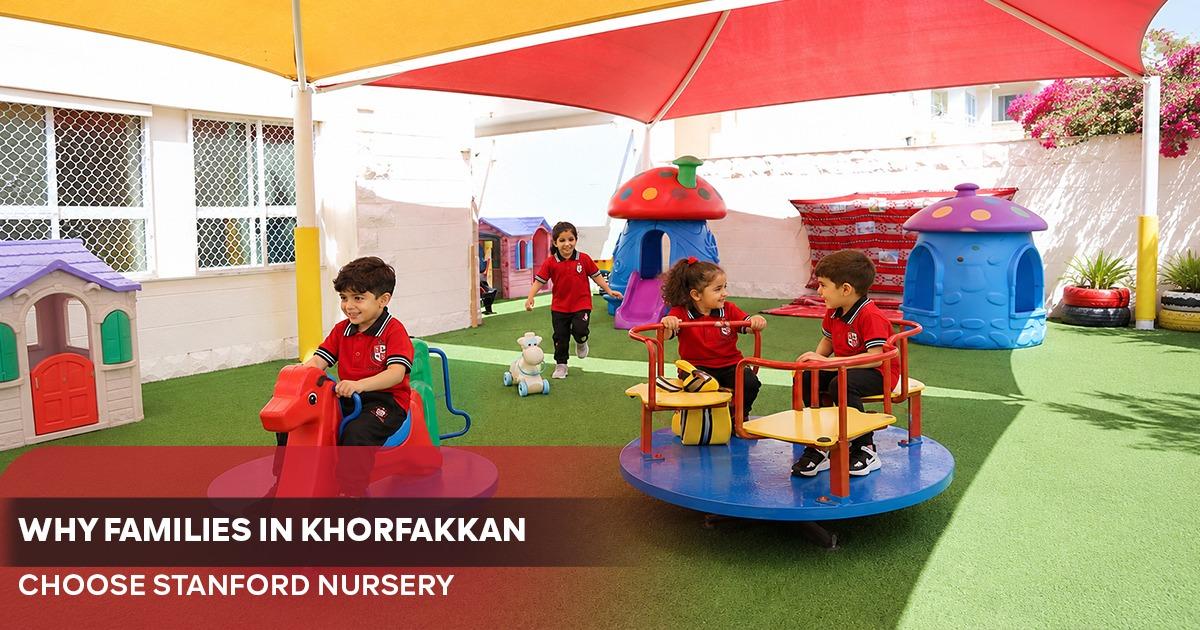
With equipment suitable for children's ages alongside open play areas that give them the opportunity to move, explore, and develop their motor skills in an environment that prioritizes their safety.
The Second Area in the EYFS curriculum activities for nurseries : Physical Development
Developing Gross Motor Skills: Stanford nursery provides open play areas that help children walk, run, jump, and practice age-appropriate motor activities, supporting muscle strength, balance, and motor coordination.
Developing Fine Motor Skills: Stanford nursery is keen to provide suitable activities such as building blocks, holding toys, and handling safe tools to develop hand and finger skills and hand-eye coordination.
A Safe Environment for Movement and Exploration: Stanford nursery cares about equipping classrooms and providing an environment suitable for children's needs, giving them space to learn, move, and play while observing safety factors.
Enhancing Independence and Self-Confidence: Stanford nursery encourages children to try new movements and activities gradually, which helps them gain confidence in their abilities and develop their independence.
Supporting Healthy and Balanced Growth: Stanford nursery integrates movement and play into daily activities to give your child an experience that combines learning with physical activity and helps them develop their motor abilities in a balanced way.
What Is ? A Parent's Complete Guide
How Do We Support Personal and Emotional Development to Overcome Separation Anxiety?
Our staff at Stanford nursery work on building positive and warm relationships with children, responding to their emotional needs, and helping them adapt gradually to the new environment.
The importance of the EYFS Areas of Learning lies in the fact that they do not focus solely on academic achievement, because a child feeling secure is the first step to building a positive nursery experience.
We realize that your child separating from you for the first time may be a source of anxiety for both of you.
The Third Area of the EYFS Areas of Learning: Personal, Social and Emotional Development
Building Confidence and Security: The Stanford nursery team is keen to treat children with care and containment so your child feels they are in a safe place where they can rely on the teachers.
Facilitating Adaptation to the Nursery: We help children adapt gradually to the daily routine and activities, which reduces stress associated with separation and makes the transition to school easier.
Developing Independence: We encourage the child to take simple steps on their own, such as choosing the toys they want and participating in activities, to build their self-confidence and self-reliance.
Enhancing Social Skills: We provide children with opportunities for interaction, participation, learning turn-taking, and respecting others to support their social and emotional growth.
How to : 7 Practical Steps for a Happy Start
When Will Your Child Start Acquiring Literacy Skills at Stanford Nursery?
A child begins acquiring reading and writing skills from the age of 3 to 7 years through listening to stories, recognizing sounds and letters, and interacting with words.
At , we support the Literacy domain through fun educational activities tailored to each child's age group to help them prepare for the next educational stage.
Modern methods of the EYFS curriculum activities for nurseries make acquiring academic skills an interactive experience rather than relying on rote memorization.
The Fourth Area of the EYFS Areas of Learning: Literacy Skills
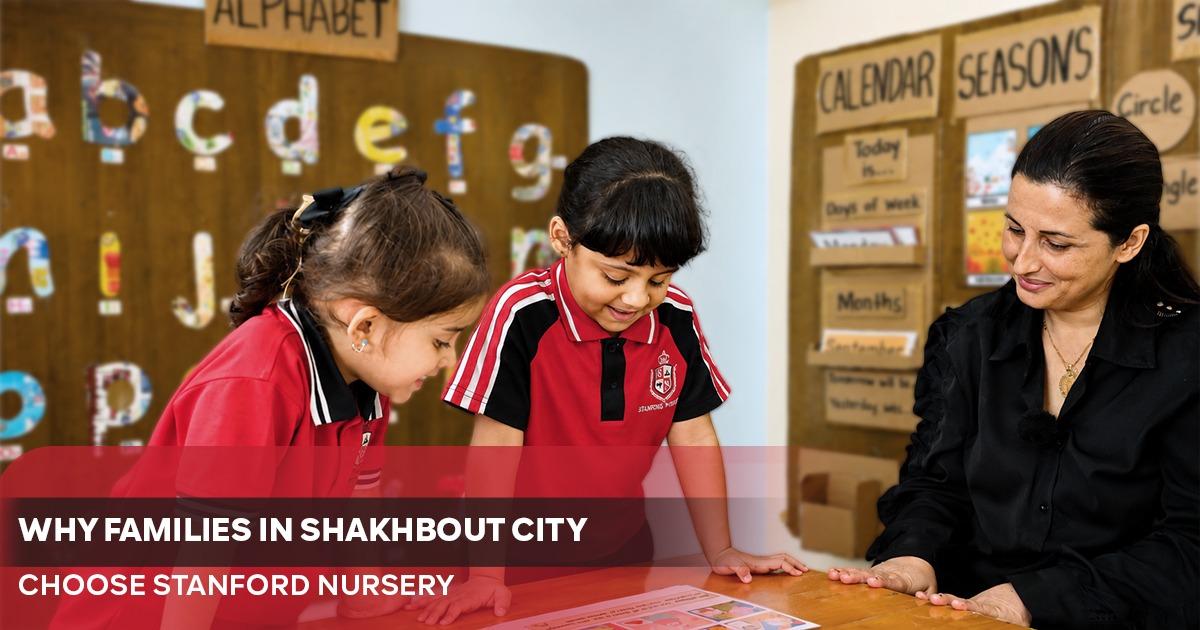
Exploring Letters and Sounds (Phonics): At Stanford nursery, we help children recognize letters and link them to their sounds through games, flashcards, and interactive activities.
Fostering a Love of Reading: We use picture books and children's books to encourage listening, comprehension, and vocabulary expansion.
Preparing for Writing Skills: We provide children with opportunities to draw, color, and practice holding tools, helping develop the fine motor skills needed for writing later on.
Preparation for the Next Educational Stage: We work on building an early foundation in reading and writing while taking into account individual differences and each child's learning pace.
How Do We Use the STEAM Model to Simplify Mathematics for Early Years?
Stanford nursery helps children acquire early mathematical concepts through play and hands-on experimentation, utilizing the principles of the British curriculum and the STEAM education in early years settings model, which integrates science, technology, engineering, arts, and mathematics.
The Fifth Area of the EYFS Areas of Learning: Applying the STEAM Model in Nurseries
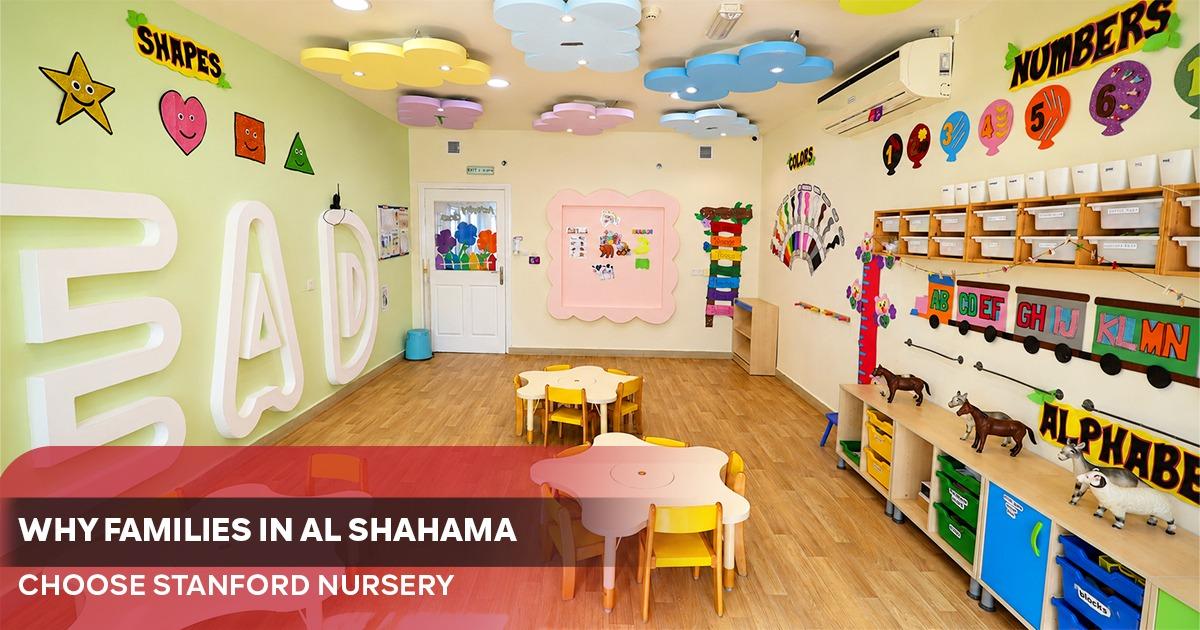
The impact of EYFS areas of learning on education is demonstrated by introducing numbers and concepts visually and multisensorially through shapes, as we give children the opportunity to discover them in age-appropriate daily activities.
Learning Counting and Numbers: Children practice counting and matching numbers to quantities using blocks, toys, and tangible tools.
Exploring Shapes and Patterns: We use puzzle-building, color sorting, and shape classification activities to help children understand relationships, similarities, and differences.
Developing Problem-Solving Skills: We encourage the child to think about how to build a tower with blocks or arrange pieces to achieve a specific goal, enhancing logical thinking, experimentation, and trial.
Why is Understanding the World Crucial for Connecting Your Child to Their Community?
The Understanding the World domain helps the child discover the environment they live in and learn about the people, cultures, and nature around them.
At stanford nursery, we are keen to provide an educational experience that broadens children's awareness and helps them understand their society and appreciate cultural diversity. Through these experiences, the most important educational goals of the EYFS curriculum are achieved, which include developing the child's curiosity, understanding of the world, and ability to interact with their community.
The Sixth Area of the EYFS Areas of Learning: Understanding the World
Exploring Environment and Nature: At Stanford nursery we provide opportunities for children to learn about animals, plants, weather, and changes happening in the environment around them.
Learning About Different Cultures: We help children discover diverse customs and traditions, developing their respect for others and acceptance of differences.
Enhancing National Identity and Community Values: We link educational activities to national occasions and positive values, such as cooperation, respect and belonging to the community.
Developing Curiosity and a Love of Exploration: We encourage children to ask questions, observe things and try simple activities that help them understand the world in an age-appropriate way.
How Do Expressive Arts and Design Foster Innovation and Creativity?
Expressive arts and design give the child an opportunity to express their ideas and feelings in various ways and help develop imagination and innovation.
The Seventh Area of the EYFS Areas of Learning: Expressive Arts and Design
EYFS curriculum activities for nurseries are an effective way to combine learning and fun. At Stanford nursery, we support this area through artistic, sensory and musical activities alongside imaginative play that turns learning into an enjoyable and stimulating experience.
Developing Creativity Through Arts: We encourage children to draw, paint, and sculpt using age-appropriate materials and tools, giving them the freedom to experiment and express their ideas.
Exploration Inside Sensory Rooms: Sensory activities help children explore colors, textures, sounds, and different materials, supporting learning through the senses.
Developing Musical Sense: We use songs, rhythms, and musical movements to enhance listening, motor coordination, and emotional expression.
Learning Through Imaginative Play: We give children opportunities for role-play and acting out situations from daily life, supporting imagination, language, and social skills.
Encouraging Experimentation and Innovation: We give children space to test their ideas and make their own shapes and designs without restricting them to a single model, fostering independent thinking.
How to Choose the Nearest Branch to Start Your Child's Educational Journey With Us?
There is no need to choose between educational quality and distance. With Stanford nursery, you can provide your child with an excellent educational experience according to the British EYFS Areas of Learning close to your home.
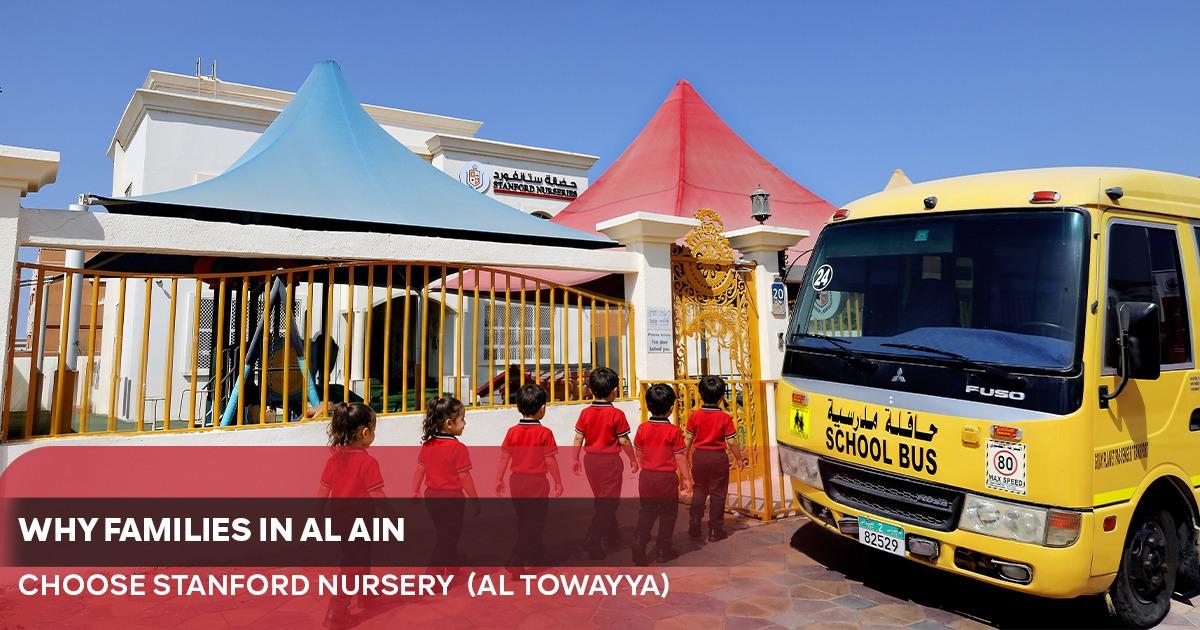
We are keen to be closer to you through 9 branches distributed across several areas including Abu Dhabi such as: Mushrif and Khalifa City A, Al Ain and Khorfakkan, so you can choose the branch that suits you best.
Start your child's educational journey today and contact us via WhatsApp to find out the details of the nearest branch or book a field tour to see the nursery environment, classrooms, and play areas for yourself, ensuring peace of mind about the place where your child will take their first steps toward a bright future.
In the end, the EYFS Areas of Learning give your child an integrated educational experience combining learning, play, and the development of linguistic, motor, social, and creative skills. At Stanford nursery, we are keen to provide a safe and stimulating environment that helps your child discover their capabilities, build self confidence and prepare for upcoming educational stages.
Prepare your child, let them start their educational journey with us, and give them a strong foundation for a future full of learning and success.